Blistered Shingles or Hail Damage on a Fayetteville Roof
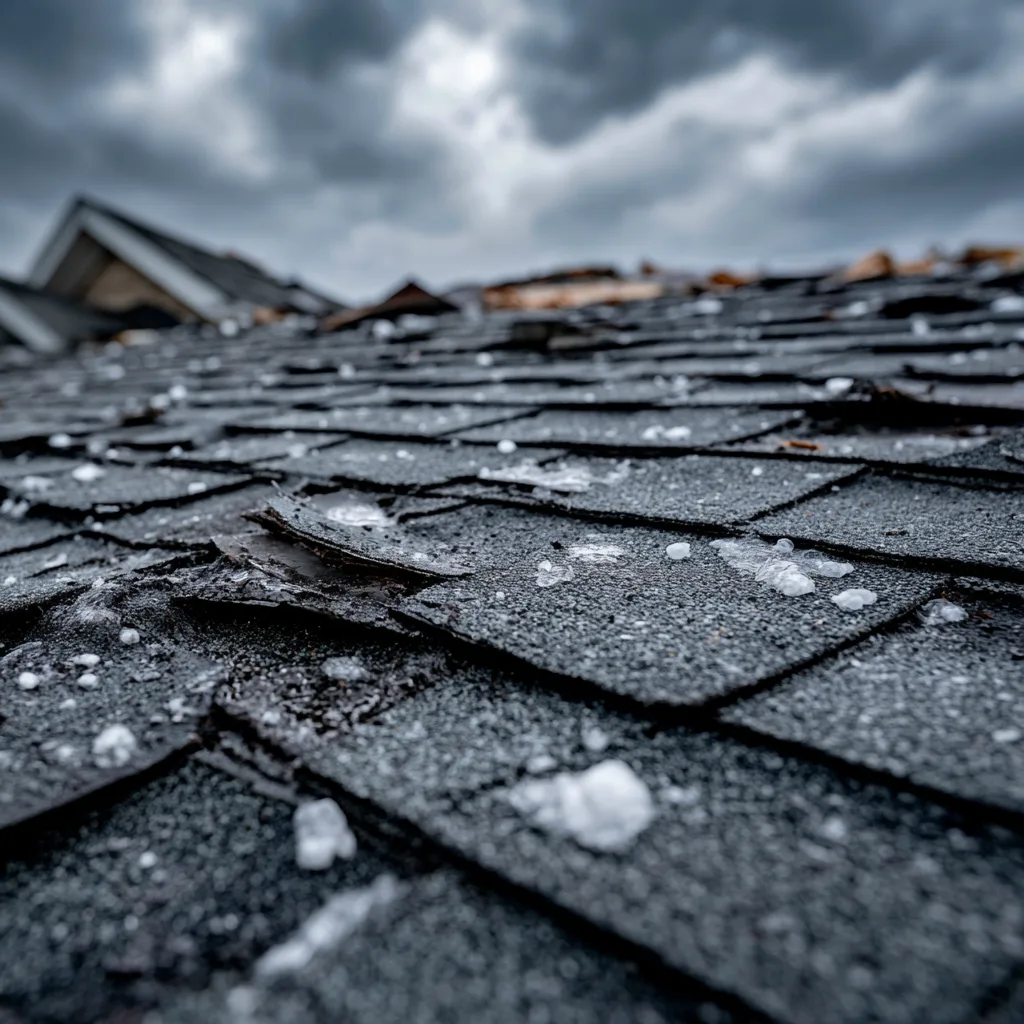
You're at the downspout with a handful of grit, looking up at dark speckles on the sunny slope. A few roofs on the street have come off since spring. You can't tell whether yours took a hit or is wearing out. Blistering and hail are two possible explanations, and they call for different repairs. Here's what those marks can tell you, what they can't, and what a roofer needs to check before you make a decision.
A blister starts beneath the surface
A blister is a small raised spot in the shingle. If it opens, it can leave a crater where granules used to be. That can look a lot like other wear from a driveway, which is where the confusion starts.
Moisture trapped within or beneath the material is one possible cause. An attic moisture problem can contribute, but so can wet decking, a wet layer left under a new roof, or too much roofing cement. A roofer needs to work back to the cause before recommending more vents or new shingles.
The useful question is whether the blister is intact, whether the shingle around it is still serviceable, and how widely the problem runs. A few raised spots and exposed, deteriorating mat across a slope are different findings. Neither gets a useful diagnosis from the calendar alone.
Hail bruises the mat under the granules
Hail strikes from outside. An impact can displace granules or damage the mat beneath them, including damage that isn't clear in a distant photo. The roofer checks the surface, the underlying damage and the pattern across the roof. This is not a reason to climb up and press on your own shingles.
There isn't one hail diameter that proves a roof is damaged. Impact angle, wind, the material and its condition all matter. The storm damage guide includes nearby NOAA reports to help place an event in time; a report near your house does not establish damage on it.
Useful clues you can collect from the ground
Write down when you first noticed the change and whether it followed a particular storm. Keep any older roof photos you already have. A fresh patch of granules in the gutter, a missing shingle or a newly exposed area gives the roofer somewhere to start, but none identifies the cause by itself.
Look at accessible gutters, siding and other exterior surfaces without climbing. Dents can support the history of a hailstorm; they don't prove the shingles failed in the same event. Likewise, a roof can need attention without obvious dents on every metal surface. Send clear ground-level photos if you have them, then let the inspection settle what needs closer attention.
Repair follows the damage, not the label
Once the condition has a name, the next question is how much sound roofing remains around it. A repair may address a limited damaged section. Wider deterioration can make replacement the better use of the money, regardless of what a neighbor decided to do.
If moisture contributed to blistering, replacing the visible shingles alone can leave the cause in place. Ask what the roofer found beneath or around the damage, what can be checked now, and what would require opening the roof. That gives you a reason for the proposed work beyond a picture of a bare spot.
Insurance is a separate decision under your policy. If you suspect storm damage, contact your insurer promptly about its process and deadlines; a roofing article cannot decide coverage. Start with a free roof inspection to understand the roof itself. Our roofers can help you work out the repair question before you commit to a larger job.
Not sure what those marks mean? Tell us what you noticed and request a free inspection.
Questions that come up at the downspout
The clues are useful. The closer inspection is what puts them together.
What causes shingles to blister?
Moisture trapped within or beneath a shingle can cause blistering. Wet decking, attic moisture and excess roofing cement are among the causes a roofer may investigate. A blister alone does not prove that the attic needs more ventilation.
Can you tell hail damage from blistering from the ground?
Not reliably. Ground-level photos and the timing of a storm help, but the roofer needs to assess the material and the damage pattern. Leave roof access to someone equipped to inspect it safely.
Does insurance cover blistered shingles?
Coverage depends on the cause, policy and insurer’s findings. Blistering is not itself proof of a covered storm loss. For the paperwork side, see the insurance claims guide.
Does granule loss mean I need a new roof?
Not by itself. The amount, pattern and condition of the surrounding shingles matter. A roof inspection can distinguish a limited repair from wear across the field.