The ask
What you send
Which side overflows, when it happens and where the downspout drains are useful starting details. Include the gutter age only if you know it.
Fayetteville, AR
Water's sheeting over the front edge every time it rains, and a gutter repair only helps if the gutter is what failed.
A re-hang or a replacement
Some gutter work comes down to re-hanging the run and adding a downspout, and some of it is the roof edge telling you the fascia behind it's gone soft.
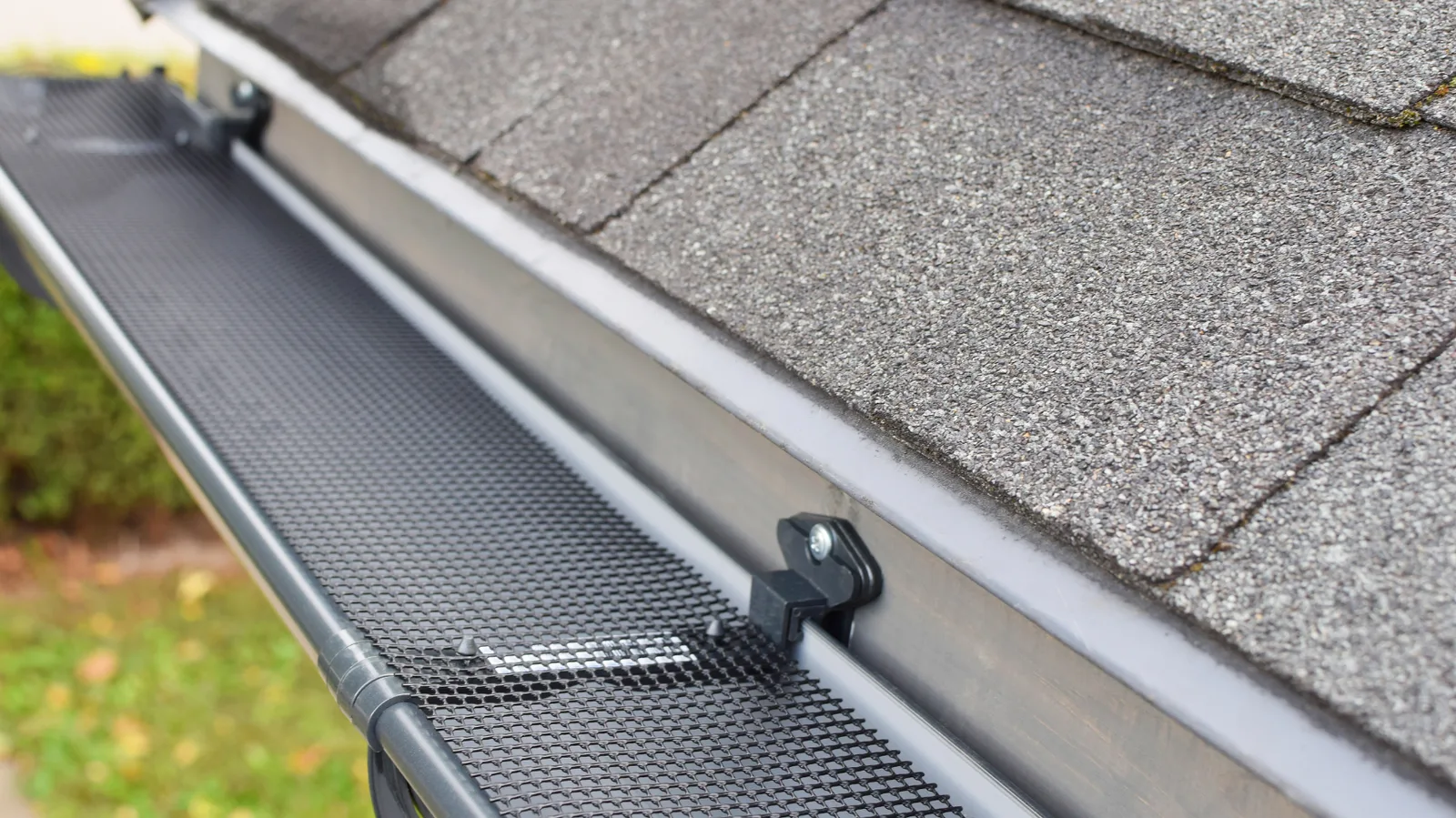
That coarse black sand where the downspout lets out is your shingle armor, washed off the roof and delivered to the one place you can see it. Which of the two jobs you have is settled at the roof edge, where the drip edge, the fascia and the gutter all meet, so you'll know before anyone talks price.
The whole system
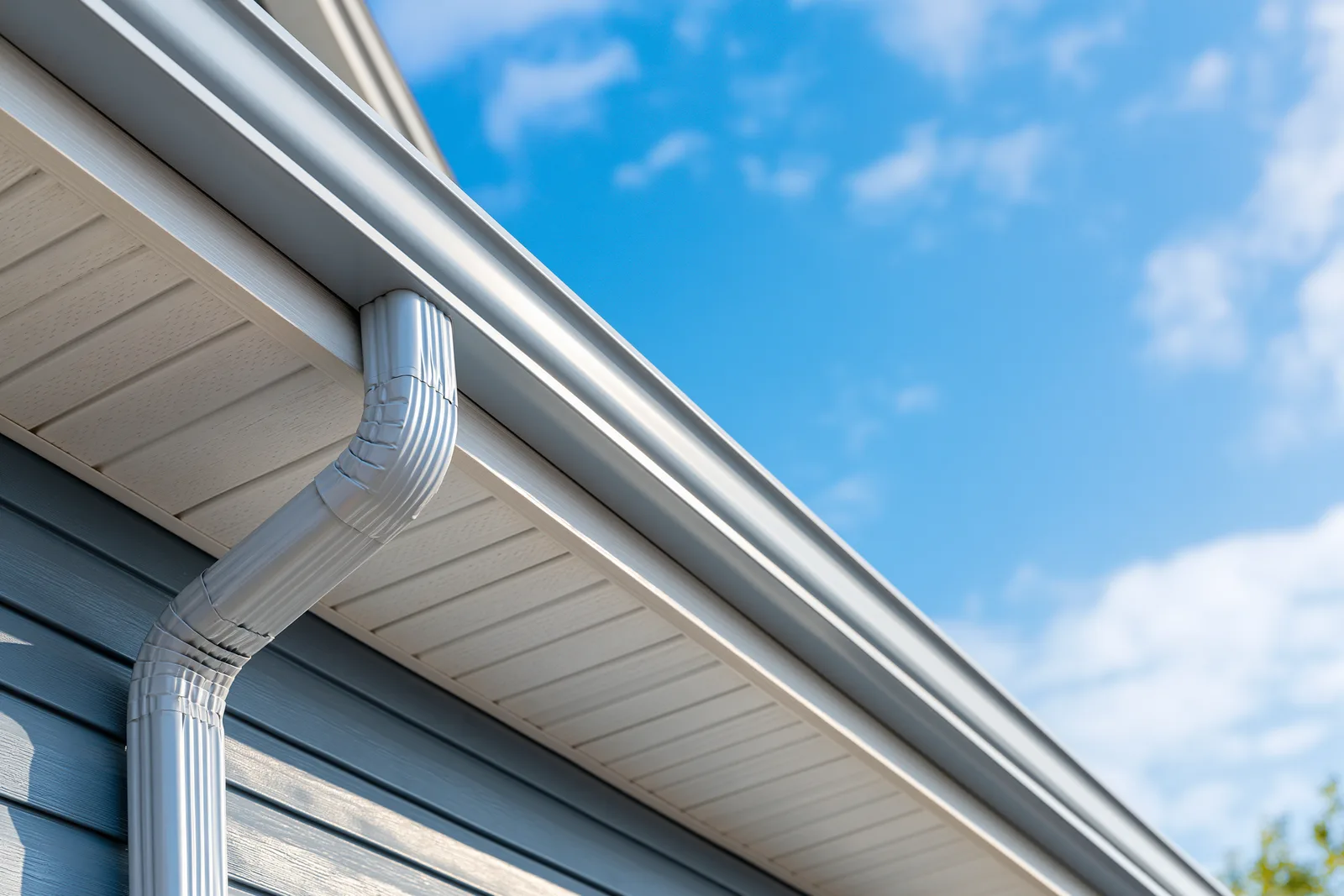
The run, outlets, roof edge and supporting wood work as one drainage system. Our roofers look for the cause of an overflow before deciding which parts need work.
The trough has to fall toward the outlet the whole way. Where a run's lost its slope you'll see water sitting in it days after the rain stops, and that weight pulls the line down further.
Hangers need sound support and spacing suited to the system and loads. A sag may involve the fastening, gutter or fascia behind it.
Outlet capacity and placement need to match the roof area and drainage design. An extra outlet can help where capacity is the issue; it does not solve every overflow.
A downspout has to put water out past the wall and downhill from it. Drop it at the corner of the slab and it undoes what the rest of the system just did.
That metal lip at the roof edge hands water off the shingles into the trough instead of behind it. When it's missing or set wrong, your fascia stays wet no matter how clean you keep the gutter.
New gutters hung on soft wood fail early, so the board comes first and your new run goes up after it.
Compare any manufacturer coverage with the installer’s terms. The warranty guide explains why the specific documents matter.
The scope may be a local adjustment or replacement with fascia repairs. Work above the gutter line may also need roof repair. Timing depends on what the inspection finds.
From overflow to repair
Tell us where water is escaping. Our roofers can check the roof edge and gutter together so a drainage repair addresses the actual cause.
The ask
Which side overflows, when it happens and where the downspout drains are useful starting details. Include the gutter age only if you know it.
The measure
The run, corners, outlets and supporting fascia need checking. Sound wood matters when a gutter has pulled away or needs new hangers.
The estimate
Compare the gutter, outlets and any wood repairs as defined parts of the scope. Ask which material and installation terms apply.
The work
The old run comes down, the soft board comes off with it, and the new line goes up with its hangers set to the span. Outlets go where your water needs to leave, and that isn't always where the old ones sat.
After
Discuss how drainage will be checked at completion. During later rain, report any continuing overflow from a safe place; do not climb out to inspect it.
From the driveway
These observations can help locate the trouble. They are clues to investigate, not a way to diagnose every gutter problem from the driveway.
Overflow lines stain the fascia: dark vertical streaks down the board behind your gutter.
A trench opens under the eave: bare soil washed out in a line where the water lands.
New or heavy granule accumulation at an outlet, which may deserve a look at the shingles above it.
The run pulls away from the house: a gap at the top edge where the hangers have backed out of the wood.
The gutter line dips between supports: a sag you can pick out from the street on a straight run.
A downspout empties against the wall: water going down at the slab instead of out past it.
Water stands in the trough days after rain: the pitch has gone or the outlet is blocked.
Several symptoms together may involve more than cleaning. If the ceiling is wet as well, roof leak repair can help trace the entry point.
Priced by the foot
Gutters price by the linear foot, so the price for your run follows the footage around your house instead of the size of the roof above it.
Seamless aluminum is the usual choice here, with vinyl under it and copper well over. What your own run costs comes off a measure of the footage, the number of outlets it needs, and what the fascia behind it turns out to be. Where that board has gone soft, the wood becomes its own piece of work before anything hangs back up.
Where gutters sit in the cost guideRun length: the footage all the way around your house, corners included. A simple one-story footprint hangs cheaper per foot than a cut-up two-story.
Outlet count and sizing: match discharge capacity to the roof area and run instead of assuming one more downspout cures every overflow.
Fascia condition: sound board and your gutter goes straight back up. Soft board and the wood comes off first, priced by the foot on its own.
Coordination: planned roof-edge work can be a useful time to inspect the gutters and fascia. Compare the combined scope before assuming a saving.
The grade beneath a Fayetteville house affects where discharged water goes. It does not make rain reach the gutter faster. The roof catchment sizes the system; the lot determines the safe path away from the house.
Roof planes feed particular runs and outlets. Valleys can concentrate flow, so the drainage design needs to account for where that water arrives.
Choose a discharge path that carries water away without creating erosion or sending it toward another building. A hillside can make that path less obvious than adding a short extension.
Leaves and branches can restrict outlets. Arrange safe cleaning and inspection where trees overhang the roof, especially before freezing weather.
Granules and downspouts
Whether the gutters come off with the roof, what the black grit in them means, and where the water's supposed to go.
Only if their condition or the new roof-edge detail calls for it. Sound gutters may be kept; damaged runs or fascia need attention. Coordinating the work can help, but a roof replacement does not automatically require new gutters.
They may be the mineral surface from asphalt shingles. Some shedding is normal, but a new heavy accumulation deserves a closer look. It does not by itself identify age or hail damage.
Condition matters more than a fixed year count. Look at joints, hangers, corrosion or damage, and the fascia supporting the run. A local repair may be useful before a whole system needs replacement.
Gutter work is part of the roofing services offered here. Our roofers can look at the gutter, fascia and drip edge together, or start with a gutter-only concern. Confirm the work included in the proposal.
Discharge should move away from the building along a suitable drainage path. The lot’s grade, erosion risks and surrounding property matter. Extensions or splash blocks may help, but location and capacity need to suit the site.
Fayetteville Select Roofing
Tell us which edge overflows or where the run has pulled away. Our roofers can look at the drainage and supporting roof edge, then discuss the repair you need.
Ask for the gutter run on its own, or priced alongside the roof.
(479) 396-3185