Describe what you noticed
The room with the stain and roughly when it started give the roofer a place to begin.
Fayetteville, AR
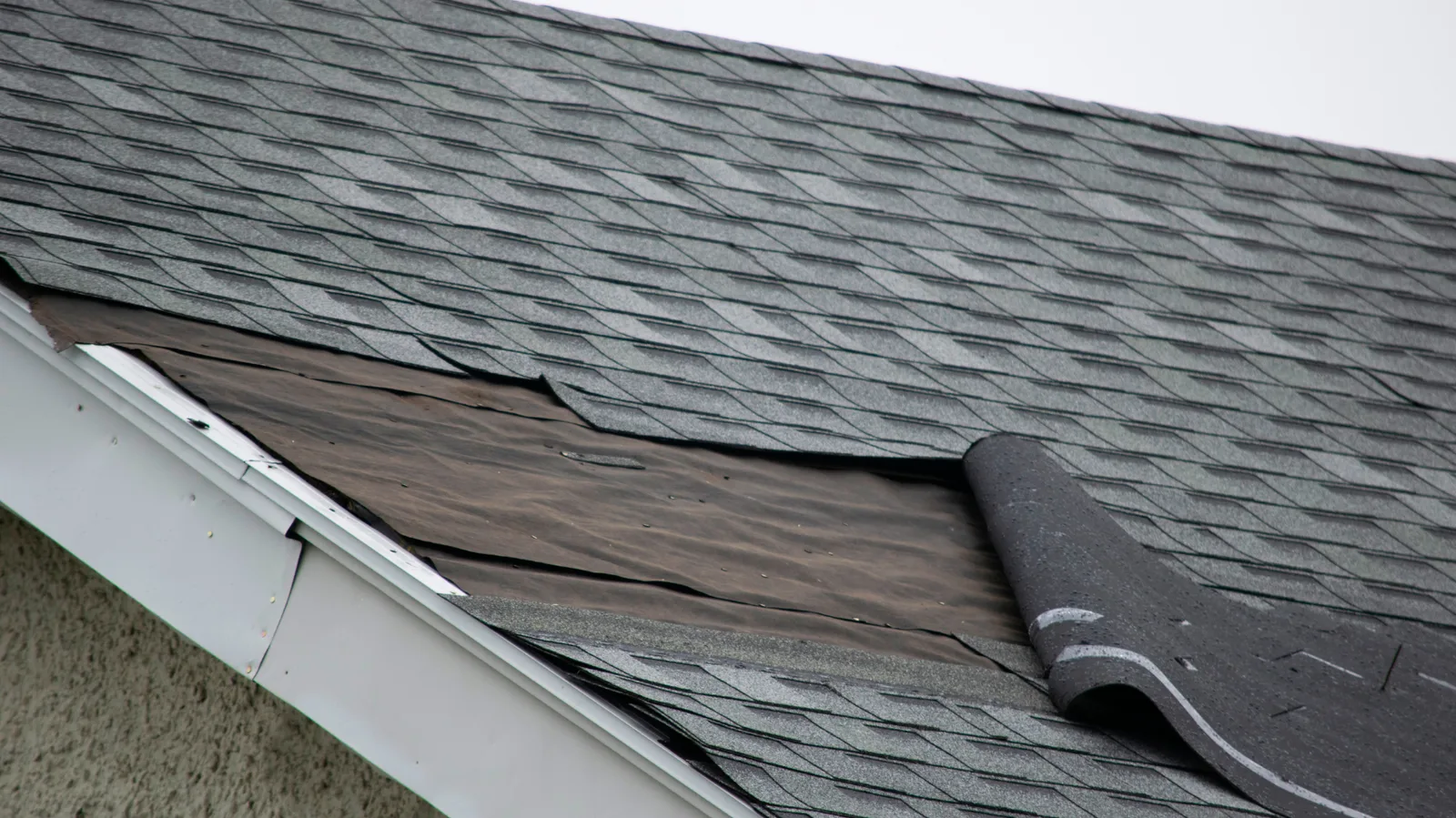
A ceiling stain, a missing shingle or flashing that has pulled away. Our roofers find the entry point and check whether a repair can tie back into sound material.
Fayetteville roof repair
A failed pipe boot and a worn-out slope can both put water on the ceiling. Working out which one you have is the roofer’s job.
If water is coming in, protect belongings only where it is safe, keep clear of wet electrical fittings or a sagging ceiling, and stay off the roof. Tell us where the water appears so our roofers can help trace the cause.
Repair, and what covers it
The repair has to address the way water gets in and reconnect to sound material around it. These are the details that define the work.
Cracked, creased or missing shingles woven back into the surrounding field, with the fasteners and sealant that hold them down.
Pipe boots, chimney and sidewall flashing, skylight curbs and valley metal. When one opens up, rain has a path past the covering.
Check the exposed sheathing for soundness and fastener support. Replace damaged wood where needed; moisture or staining alone does not settle that decision. Deck repairs, access and the surrounding details can all change the scope.
Felt or synthetic underlayment and the drip edge wherever shingles came up, put back the way the shingle maker's instructions call for.
Any workmanship warranty comes from the contractor offering it. Ask whether one applies to the proposed repair, how long it runs and which work it covers.
The maker’s terms govern product coverage. The product and any repair-work warranty are separate questions.
Full terms, and what neither kind of coverage pays for, are on the roofing warranties guide.
The order it happens in
Here's the order it runs in, from the call to the finished repair.
The room with the stain and roughly when it started give the roofer a place to begin.
The inspection follows the likely water path and checks whether the surrounding covering will hold a repair.
A boot replacement, flashing rebuild and wet-deck repair remove different amounts of roof. The proposed work should explain which one you need.
Review the scope, price and any warranty before hiring. Hidden damage and changes need a clear agreement too.
Settle the work date, driveway access and cleanup with the contractor doing the repair.
The patch that didn't hold
Recurring failures, widespread wear and brittle shingles are reasons to compare a broader repair with replacement. A roofer checks the material up close; you do not need to test it yourself.
The patch count: the same slope's been repaired more than once, and each fix bought less time than the one before it.
The spread: failures keep turning up on slopes nobody's touched, instead of staying put in the one spot you already know about.
The deck underfoot: softness or movement noticed by the roofer calls for checking the sheathing and its support. The cause and extent need establishing before damaged sheets are counted.
The granules: bare dark patches across the whole field of shingles, and gutters that keep filling with grit.
The shingle condition: cracking during careful handling or curled edges can limit repair options. Our roofer checks whether a repair can tie into sound material and how much of the roof is affected.
Ceiling stains and attic drips have tells of their own, and those live on the roof leak repair page.
Sizing the repair
The amount of roof that has to come off is only part of the price. Access, flashing and deck repairs change the job too. These are scope differences, not Fayetteville price tiers.
See the full cost guideA pipe boot, a few damaged shingles or a short flashing run can be a small job when the material around it is sound.
Rebuilding the connection takes more surrounding shingles off, and the water path beneath it needs checking.
Damaged wood adds removal and replacement beneath the covering. Widespread wear is a reason to compare the work with replacement.
A tarp is short-term protection while permanent work is arranged. Roof height, slope and anchoring affect the job.
A house can have an older roof, a recent replacement or several changes made by different owners. That history matters when new work has to join what is already there.
If surrounding shingles still lift without breaking, a flashing or boot repair can stay contained.
Earlier patches and hidden layers can make the repair harder to connect. The inspection needs to establish what remains sound.
Reported weather belongs in the storm history. The repair decision belongs to the condition of this roof.
Tarps, decks, warranties
The questions that come up most on a Fayetteville repair. Low-slope and flat sections answer differently, and those live on the flat roof repair page.
A contained repair usually costs less than replacing the roof. The useful comparison is how much sound roof it preserves and whether the next leak is likely to be somewhere else. There is no universal percentage at which replacement wins. Compare the actual work on both options.
How long a repair takes depends on how much roof has to come off to reach the problem. A pipe boot or a small patch of shingles is short work; a valley rebuild, a chimney flashing rebuild or decking replacement runs longer, and weather still decides which day it can happen at all. You'll hear what the job needs from your roofer before any of it begins.
That depends on the product terms and how the repair is performed. Using incompatible materials or ignoring installation instructions can put coverage at risk. Before hiring, have the contractor identify the product requirements and any warranty offered on the repair. The warranties guide explains the distinction.
Tarping is priced by how much roof it has to cover and how it has to be anchored, so a small cover over one slope and a wrap across a whole side are different figures. It provides temporary protection while a repair is arranged, and its condition needs checking if the wait continues. Our roofer handles the roof access; you can explain where water is getting inside.
Sagging, movement or visible deterioration gives the roofer a reason to check the sheathing and its support. Dark staining can record an old leak without making the wood unsound. The condition of the exposed wood and its ability to hold fasteners decide what needs replacing. See the Fayetteville roofing permits guide for the City’s published guidance. The repair scope should explain how any further damage found when the roof is opened will be counted and approved.

Fayetteville Select Roofing
Tell us what you can see and where the water shows up. A free inspection gets a roofer on the roof to work out whether the fix is small or reaches further.
(479) 396-3185