Tonight
Protect what you safely can
Move belongings away from water if it is safe. Keep clear of wet electrical fittings and sagging ceilings, and stay off the roof. If the building shows structural distress, leave it and seek emergency help.
Fayetteville, AR
You've got a bucket on the floor and no idea what's above it. That's the first thing a leak repair answers.
A small fix or a bigger one
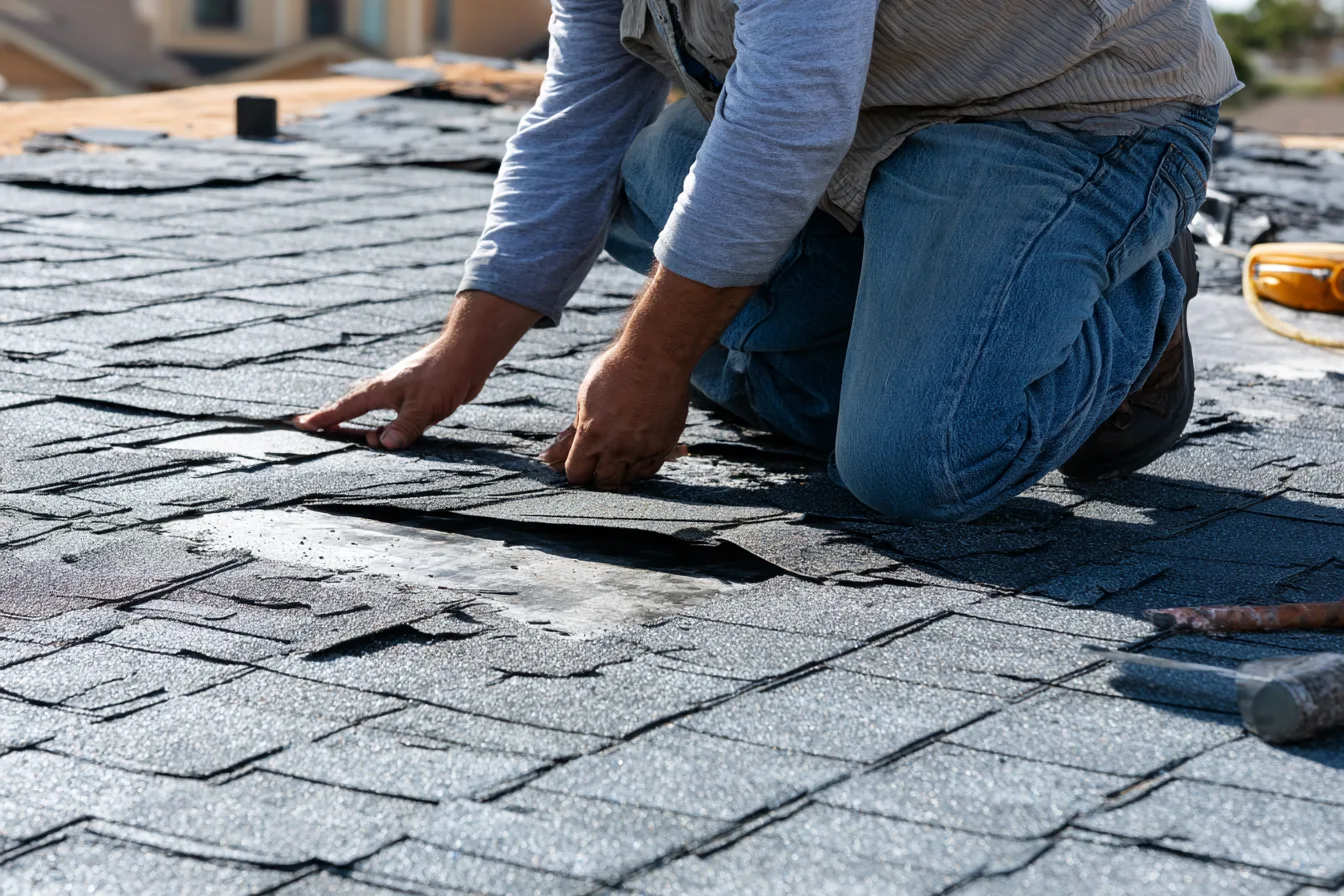
A cracked pipe boot and water-damaged decking are different repair scopes. Our roofers trace the water path and check the surrounding material before choosing the fix.
A pipe boot seals around a roof vent. If it has failed while the nearby roof remains sound, a focused repair may solve the problem. When water has damaged the layers beneath, that work belongs in the scope too.
On the estimate
Once the source is identified, the repair needs to address the failed detail and any affected layers around it. The extent can be larger or smaller than the ceiling stain suggests.
The boot, flashing, valley, fastener or ridge detail that let the water in.
Check the underlayment in the opened area and replace damaged material as needed. The repair must connect with the surrounding layers using the overlaps and details the system requires.
Unsound wood needs repair. Fayetteville’s published FAQ says replacing decking requires a permit; confirm the current requirements and responsibility in the permit discussion.
Ask what workmanship or material terms apply to this repair. A localized repair does not automatically carry the same coverage as a new roof. See the warranty guide.
Interior drying, drywall and paint may need separate work. Establish those arrangements before closing a damaged ceiling.
A leak repair is usually a short job once the source is found. Wider damage lives on the roof repair page, and low-slope sections on flat roof repair.
The order it happens in
Tell us promptly if water is still coming in. Safe access and weather shape the roof work; the first priority inside is keeping people away from hazards.
Tonight
Move belongings away from water if it is safe. Keep clear of wet electrical fittings and sagging ceilings, and stay off the roof. If the building shows structural distress, leave it and seek emergency help.
The trace
Our roofer works up-slope from where the water shows, checking boots, flashing, valleys and fasteners until the entry point turns up.
The write-up
Discuss the source, affected layers and work recommended. If you need photographs or a written condition report, arrange that scope with the roofer.
The repair
Our roofer pulls the failed part, makes the underlayment around it right, and replaces any decking that's gone soft.
The next rain
Discuss how the repair will be checked and what to watch afterward. Report continuing moisture promptly so the roof and any other possible source can be reassessed.
From inside the house
A growing stain, drips or damp material can point to continuing moisture. A dry ring does not prove the cause was repaired. Our roofers use the history and inspection together, rather than relying on the color of a stain.
A ring that's still growing: the rim looks damp and darker than the middle.
Paint lifting along a ceiling seam: a straight line of bubbling rather than a blotch.
A musty smell in one room: strongest in a closet or against an outside wall.
A drip you can still hear: the rain outside stopped an hour ago and it hasn't.
Damp insulation or stained framing visible from a safe access point. Do not enter an unsafe attic to look for it.
Daylight through the roof deck: visible from inside the attic where nothing explains it.
If the roof lost shingles in a storm before any of this started, storm damage is the page for that.
What it runs
A leak repair price is set by how far the water got before you saw it. A split boot caught early is one part on one spot. Water that tracked along the framing takes underlayment and soft decking back to dry wood. Neither gets a price until the source is traced.
The price follows the failed detail, affected layers, material and access. There is no fixed percentage of replacement cost that makes a repair wrong. Compare its likely usefulness against the roof’s condition; the cost guide provides regional replacement context.
See what a replacement runs hereA boot, a short flashing run or a few damaged shingles, with sound roofing around them.
Underlayment or decking work needed around the source.
Multiple affected areas, unsuitable material or broader deterioration that needs a repair-versus-replacement discussion.
Access, temporary protection, disposal and any separate interior work need to be understood alongside the roof repair.
Rain is not the only time water can reach a ceiling. Snowmelt can back up behind ice, and attic condensation can resemble a roof leak. Tell the roofer whether moisture followed rain, a thaw or a cold period.
Snowmelt refreezes over the cold overhang, and the water behind it finds the seams above.
A winter leak often leaves the roof looking untouched, so the trace happens up close.
In warmer weather, flashing failures, damaged roofing and other openings may let rain in. The timing and inspection help distinguish them from plumbing or condensation.
Leaks without rain
These come up most while the ceiling is still wet.
Possible causes include delayed drainage after rain, melting snow or ice, condensation or a source other than the roof. The timing helps, but the amount of water alone does not settle the diagnosis.
Yes, a defined leak may be repairable where the surrounding roof is serviceable. An inspection helps establish whether local work will address the cause or whether deterioration extends farther.
Yes, a leak that has stopped is still worth having checked. A dry ceiling does not establish that the layers above it are dry or that the entry point is fixed. Tell the roofer when it happened and what the weather was doing; that history helps trace the source and decide what needs opening or repair.
Interior repairs are a separate scope to arrange. First stop the source and establish that affected materials are dry and suitable to keep. Then the ceiling work can be planned without hiding an unresolved moisture problem.

Fayetteville Select Roofing
Tell us the room, when the leak started and whether water is still coming in. Our roofers can help trace the source and discuss the repair.
How much roof comes off to reach the water, and whether the deck opens, are what the figure turns on.
(479) 396-3185