Step one
The moisture survey
Establish the existing assembly and moisture condition using the agreed investigation. Testing and any formal report are separate scope decisions, not assumed free-inspection deliverables.
Fayetteville, AR
A coating can be worth considering when the existing roof is sound enough to keep. Condition and preparation decide whether that saving is real.
Fluid applied restoration
A lower coating price is useful only if the roof can support the system. Existing moisture, loose material and incompatible surfaces need attention before a fresh finish covers them.
Start with a roof inspection. A coating proposal may also need a moisture survey, test patches or other investigation. Agree any specialized testing, written report and charge before that work.
The prep decides it
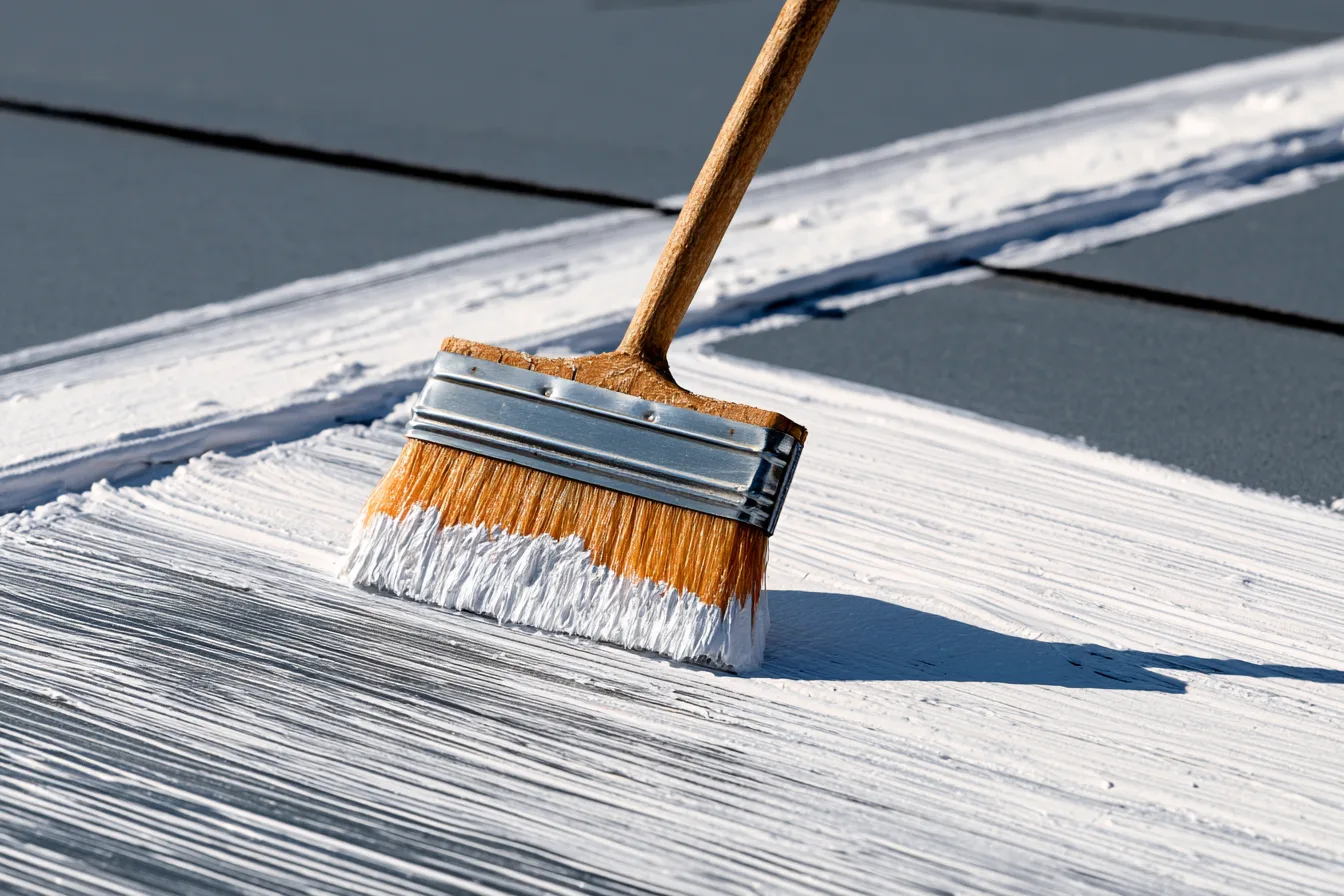
A coating needs a prepared surface it can bond to. The price follows measured area and the repair and preparation work the existing membrane needs before anything goes over it.
A moisture assessment helps establish whether the existing assembly is suitable. Methods may include scanning and confirmatory cuts, depending on the roof and proposed system.
Wet material cannot simply be sealed in. Limited damaged areas may be removed and rebuilt; widespread moisture can make replacement the better scope.
Open seams, split laps and loose fasteners need repairs compatible with the existing roof and the new coating. These quantities belong in the proposal.
Curbs, flashings and drain details need reinforcement where the specified system calls for it. Correct drainage problems and check the product’s ponding-water limits.
Cleaning, drying, adhesion tests and any required primer prepare the surface. The method depends on the existing material and the coating manufacturer’s instructions.
The deck, insulation and existing covering must be suitable for the chosen coating system. An unsuitable roof needs repairs or replacement before restoration can make sense.
Coverage depends on the particular product, system, application and warranty. Compare the written terms, including substrate and ponding exclusions, using the warranty guide.
How the work runs
Preparation and repairs come before application. Coating needs the surface and weather conditions specified for that product, with enough time to cure. A recent puncture or open seam remains a repair question before it becomes a coating question.
Step one
Establish the existing assembly and moisture condition using the agreed investigation. Testing and any formal report are separate scope decisions, not assumed free-inspection deliverables.
Step two
Remove damaged material where a local repair can return the assembly to suitable condition. If the deterioration runs too widely, compare replacement before spending on surface restoration.
Step three
Repair seams and details, reinforce as specified and address drainage. The coating proposal should identify this preparation rather than bury it under one square-foot price.
Step four
Clean the surface, allow it to dry, and use the specified primer where required. Adhesion testing helps establish that the new system can bond to the existing roof.
Step five
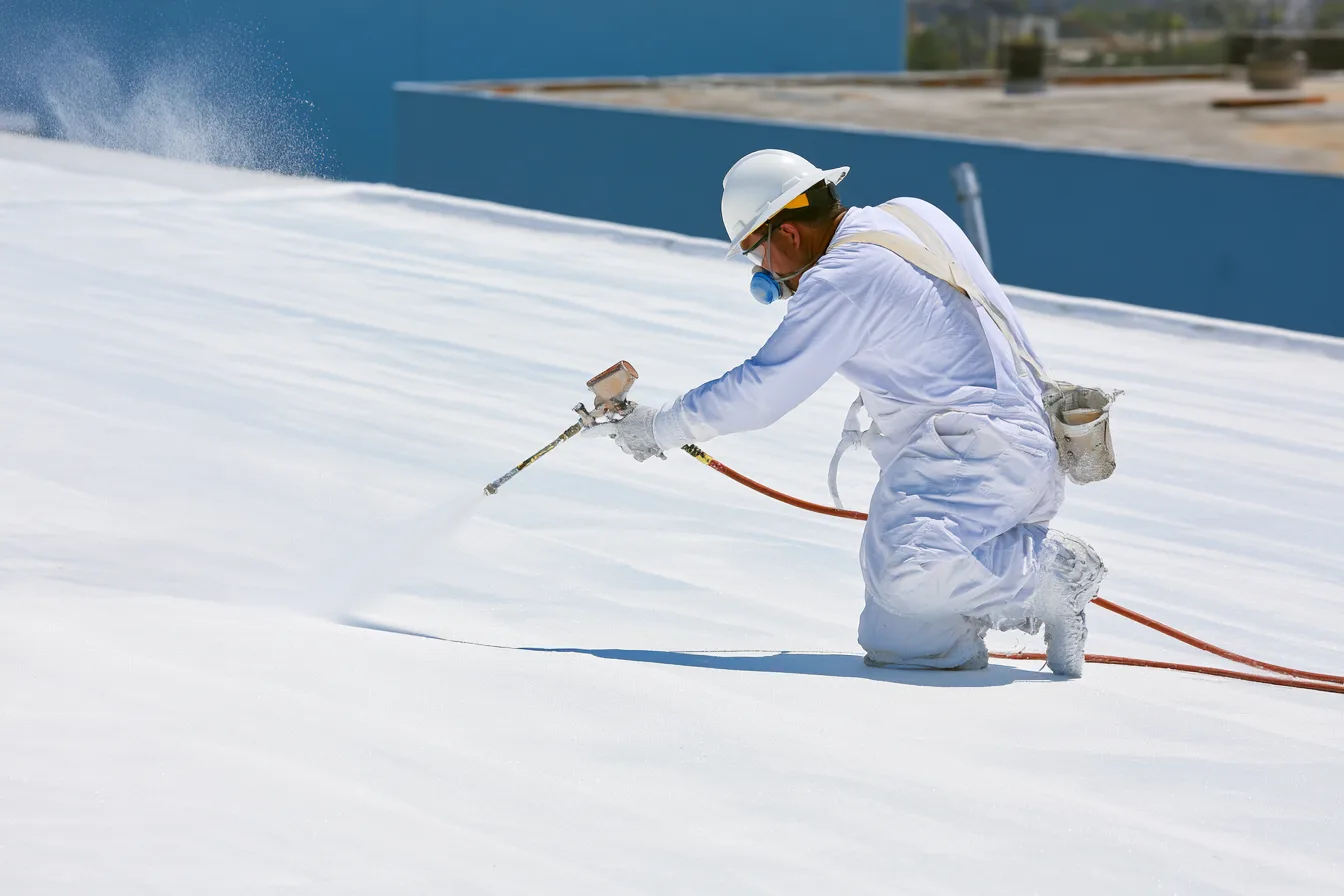
Apply the specified coats at the required rate and thickness. The product’s instructions determine the sequence, checks and cure conditions.
Silicone or acrylic
Chemistry, service life and what a coating is priced on, answered for a low slope commercial roof.
Match the product to the existing roof, drainage and manufacturer’s requirements. Some silicone systems permit ponding exposure that many acrylic systems exclude, but chemistry alone is not a specification. Compatibility, preparation and the written coverage still need checking.
A qualifying roof may cost less to restore than replace, but repairs and preparation can change the difference substantially. Compare the complete scope. Our cost guide prices steep-slope shingle and metal replacement; its rates do not apply to coatings.
Service life and warranty term depend on the system, application, existing roof and maintenance. Recoating may be possible later if the assembly still qualifies. Ask for the proposed thickness, inspection needs and actual warranty rather than a generic lifespan.
Wet material has to be addressed. A limited affected area may allow removal and repair before coating; extensive moisture can favor replacement. Sealing the surface does not dry the insulation beneath it.
Ask for the manufacturer or system coverage and the contractor’s application terms. Read exclusions for the existing substrate, drainage and maintenance. No single warranty description applies to every roof coating.
Fayetteville Select Roofing
Send the building address, roof type if known and the problem you want to solve. Request a free inspection to discuss whether a coating deserves a closer assessment.
(479) 396-3185