Step one
The look
The roofer assesses the roof using safe access and checks the damage against the material’s condition.
Fayetteville, AR
Hail came through, the neighbors are getting new roofs, and you can't tell whether yours took damage worth repairing or came out fine.
The hail question
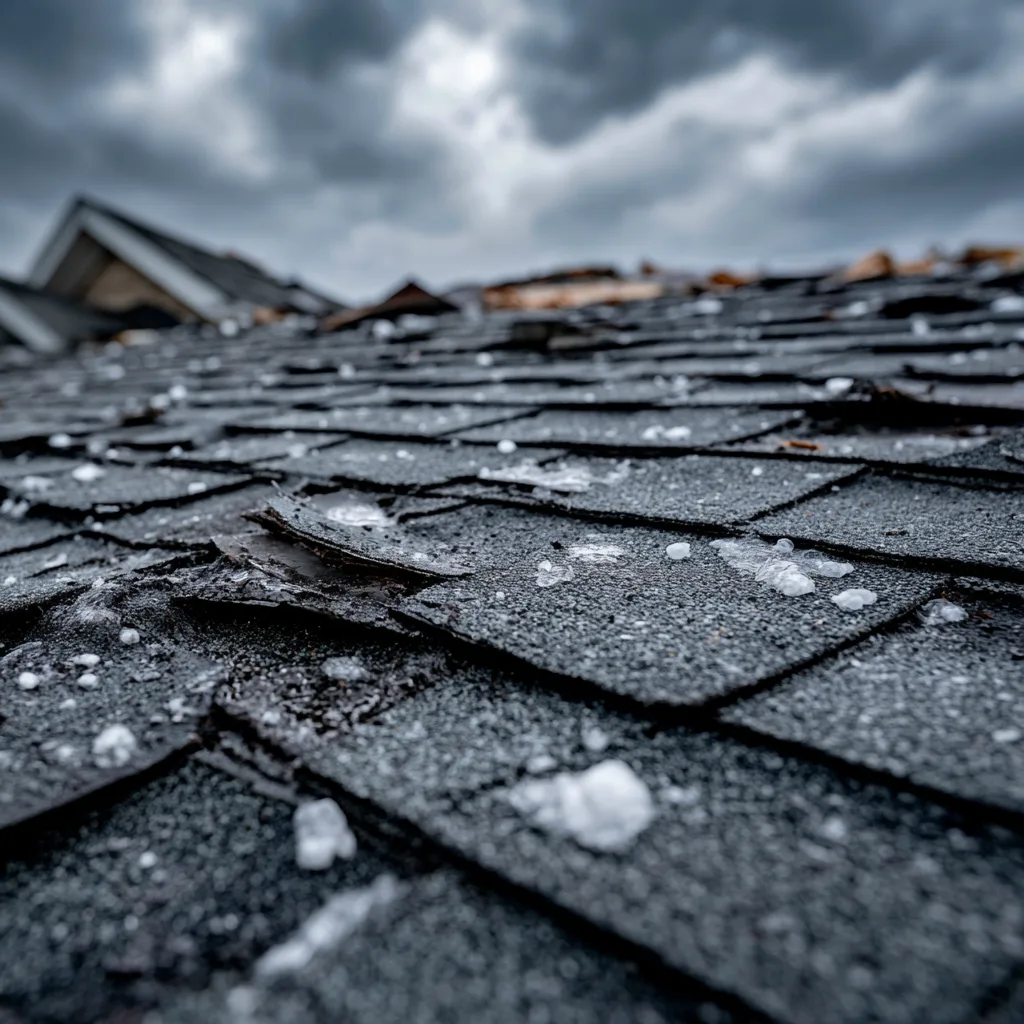
Hail can strip the granules off your shingles and bruise the mat underneath without ever putting a hole through the roof.
A bare spot does not tell the whole story. Our roofers assess the surface, the material beneath and the pattern across the roof, including other causes of wear. That gives the repair recommendation a basis beyond what happened to the house next door.
Only what hail touched
A hail repair may involve a limited area or a larger section. The condition, repairability and compatible materials decide what should be included.
Define the affected area and where a reliable repair can tie into sound material. Full slopes are not automatically removed after every hail finding.
Check the deck in the areas opened for repair and investigate further where the findings call for it. Replace wood that is unsound or cannot provide the required support; a limited repair does not expose every sheet on the roof.
Rebuild the underlayment as required for the area being opened and the roofing system above it.
Check flashing and boots for functional damage and compatibility with the planned repair. A dent alone does not settle the replacement decision.
Inspect caps and vents with the surrounding covering and include damaged components in the appropriate scope.
Assess affected gutters and outlets separately. Distinguish cosmetic dents from drainage or attachment problems.
Confirm the material and workmanship terms available for the proposed work. The warranty guide explains what to compare.
Order of work
Start with an inspection and a clear account of what changed. Scheduling depends on access, weather and the work required; the first call is not a completion-date promise.
Step one
The roofer assesses the roof using safe access and checks the damage against the material’s condition.
Step two
Discuss the findings and proposed repair. Agree any particular documentation you need for your records or an insurer.
Step three
You keep the estimate, ask whatever you want about it, and then decide.
Step four
Tear-off, decking, underlayment, shingles and metals, in that order, weather permitting.
Step five
Review the agreed scope, cleanup and closeout with the contractor. Stay on the ground when looking over the finished roof.
Clues to have checked
Visible changes provide clues, and a closer inspection helps establish the cause. Blistering and hail can be confused in distant views.
Localized damage beneath granule loss that needs professional assessment, not a homeowner climbing up to press on shingles.
New or scattered areas of granule loss, assessed alongside other possible causes.
Dents in the soft metals, meaning vent caps, pipe boots, flashing and the gutter face.
A pile of granules at the downspout outlet, heavier than ordinary first-year shedding.
Spatter marks on painted metal, where hail knocked the weathered film off in clean spots.
Bare black mat showing through in patches, which is the layer that's supposed to stay covered.
Nearby dated NOAA reports are available in the storm guide. Their report points and magnitudes do not establish damage at your address.
Ranges
The affected area, material, access and layers beneath decide the repair price. The cost guide gives regional replacement ranges for broader planning; it is not a rate card for hail repairs.
Open the Fayetteville roof cost guidea steep roof takes longer and needs more setup, and that shows up in the number.
Extra layers increase removal and disposal, but the effect on the total depends on the job.
soft or split boards stay hidden until the shingles are off, so they price as they turn up.
hail tear-off is heavy, and hauling it away is a line of its own.
Roof material, condition and exposure can change the effect of a storm from one house to the next. Our roofers assess this roof rather than transferring the neighbor’s replacement decision to it.
Granules protect the asphalt beneath. Their loss needs context: amount, pattern and the condition of the mat matter.
Brittleness and earlier wear can affect repairability. Age is a clue to investigate, not a replacement instruction by itself.
An extra covering conceals the older roofing and limits what can be seen of the deck. Records and assessment of accessible areas help establish the scope, with concealed conditions addressed when the roof is opened.
Stone size and season
Short answers here. The longer versions live in the storm damage guide.
There is no one diameter that proves damage. Impact conditions and the roofing material matter, including wind, angle and existing condition. The inspection needs to establish the actual damage.
Spring storms are a reason to stay alert, but hail can occur outside a seasonal expectation. The dated local archive is more useful for checking a particular event than treating one month as proof.
Yes. Damage may be present before water appears inside. An inspection assesses condition and repair needs; it cannot promise that every damaged roof will leak on a particular schedule.
The roof inspection offered here is free. If you need a formal report or specialized claim documentation, agree that scope separately. The insurance guide explains the policy side.

Fayetteville Select Roofing
Hail damage in Fayetteville, AR is settled up on the roof, because a bruise and ten years of ordinary weather don't look any different from the ground. Ask Fayetteville Select Roofing for the hail inspection. Take your time with what comes back.
(479) 396-3185