Step one
You describe the building and where it leaks
Describe the building’s use, leak locations and repair history. Include who authorizes work and any access restrictions.
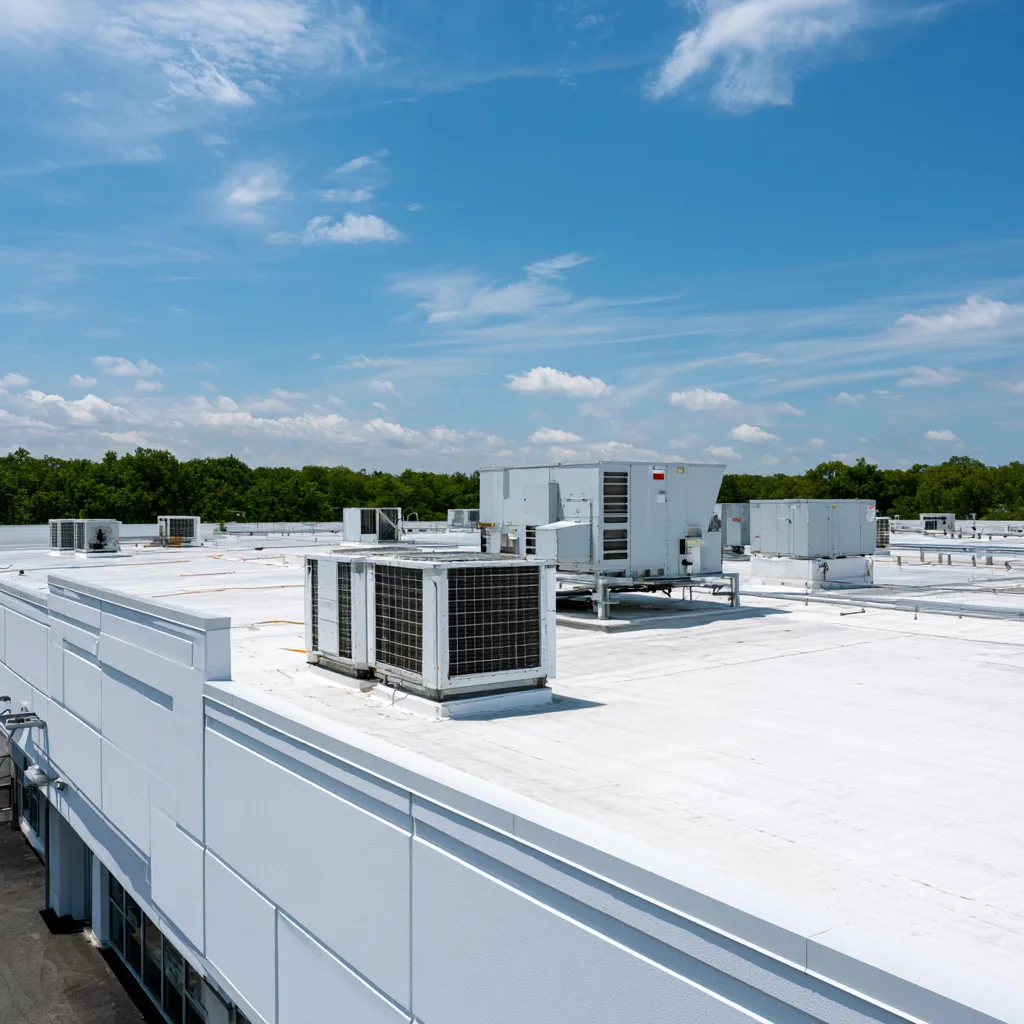
Fayetteville, AR
You have patched this flat roof more than once, and patching is now the question. A replacement quote starts from a measurement.
Repair or replacement
How many more patches is this roof worth? The answer depends on the membrane, the extent of wet or damaged layers, drainage and what can be repaired reliably.
Sometimes the answer is that it is not time yet. Where the membrane is sound and the board under it is dry, a repair is still the better money, and that is what comes back to you. Ask Fayetteville Select Roofing for a measured look at the flat roof you have.
Building the scope
This ledger covers a tear-off replacement: the old roofing is removed to the deck, then the new assembly is built up. The quote should account for each part separately, with an allowance for concealed deck repairs that cannot be settled until the roof is opened.
Roof surface, wall flashings and other details need separate quantities suited to the assembly. A building footprint alone does not capture all of the work.
Existing layers affect removal, disposal and whether a recover is permitted. Records and appropriate investigation help establish the count.
A moisture survey and any agreed test cuts can help identify damaged insulation. Ask what the price includes and how further findings would be handled.
Deck type and condition determine the repair. Inspection may find visible problems early; concealed damage may remain an allowance until tear-off.
Ponding can involve blocked outlets, roof geometry, settlement or damaged insulation. Identify the cause before pricing tapered insulation, drainage changes or structural work.
Drains, curbs, pipes and terminations each need a detail suited to the new system. Edge securement belongs in the design with the field attachment.
Compare the proposed manufacturer or system warranty with the contractor’s workmanship terms. The warranty guide explains the questions to ask.
The replacement ranges published here are Northwest Arkansas per-square-foot figures for shingle and metal on a sloped roof. A low-slope estimate needs its own measured area, assembly and findings from the inspection and any agreed moisture investigation.
How the job runs
Flat roof replacement runs as a sequence, and every stage below has a condition it has to meet before the next one opens. The paperwork that goes with a Fayetteville flat roof job is set out on the permits page.
Step one
Describe the building’s use, leak locations and repair history. Include who authorizes work and any access restrictions.
Step two
Agree the inspection and any moisture investigation needed for the proposal. Specialized testing, cores and a formal condition report need their own scope and authorization.
Step three
Check the assembly, quantities, allowances and exclusions. The contract should explain how newly exposed damage will be priced and approved.
Step four
The contractor plans removal, weather protection and the new assembly in stages. Ask how changing weather and concealed damage will affect the daily plan.
Step five
Arrange the closeout with the contractor, including the agreed records, drainage checks and maintenance requirements. Review safely without walking the roof yourself.
When repair stops paying
What owners ask about most before the first section comes off.
Widespread deterioration, recurring failures and extensive wet insulation can make another patch poor value. A limited damaged area may still be repairable. The assessment needs to establish extent and cause, not just count ceiling stains.
A recover may be possible where the deck, layers and condition meet code and the new system’s requirements. Wet or unsound areas need to be dealt with first. Coatings have their own compatibility and substrate requirements.
The available manufacturer or system warranty and the installer’s workmanship coverage depend on the chosen assembly and contract. Ask for both sets of terms before signing; our warranty guide covers what to compare.
The roofer who prices it starts from measured area, then works through how much of the insulation comes back wet, what the deck turns out to need, and how many drains, curbs and penetrations have to be detailed. Access moves it as well: a building with no back lot costs more to work around than one with room for a dumpster and a lift.
Area, removal, insulation, drainage details, access and weather shape the schedule. Ask for the sequence and how the building will be protected if the work changes. A simple duration based only on square footage misses those details.
Fayetteville Select Roofing
Send the address and describe the leaks or repeated repairs. Our roofers can inspect the roof and help you decide whether replacement is the right next step.
Square footage sets the first number, and what the survey finds under the membrane sets the last one.
(479) 396-3185