When a Fayetteville Reroof Turns Into Decking Work
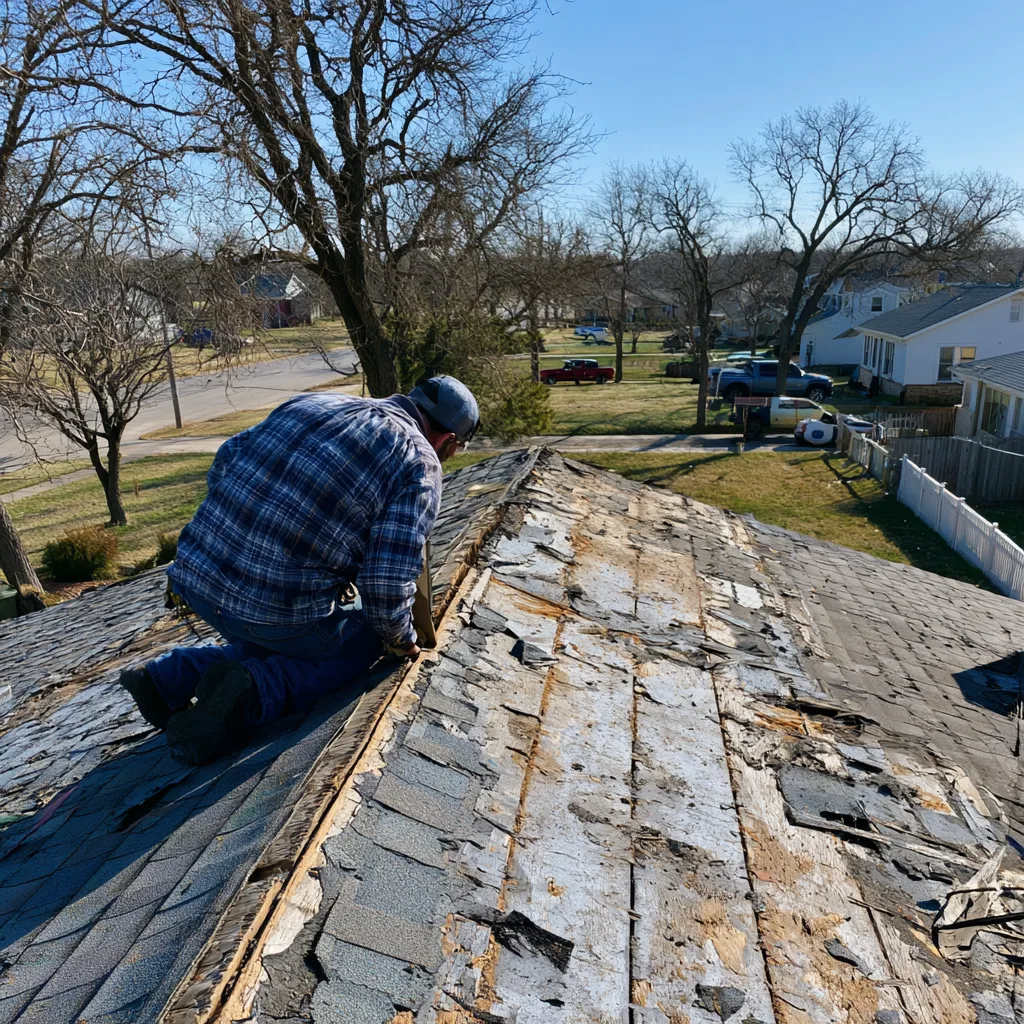
The old shingles come off and a soft patch of wood turns up beside a valley. From the driveway, that can sound like a price you thought was settled has opened back up. The decking was hidden when the estimate was prepared, but the way extra wood will be priced doesn't have to be a surprise. A clear allowance and an agreed change process make that conversation much easier before tear-off day.
The morning the old roof comes off
Your deck is the wood surface beneath the roof covering. It may be plywood or OSB panels, or individual boards on an older house. Underlayment and roofing fasten to it, so it has to provide a suitable base for the new system. An attic inspection can reveal some problems from below; it cannot expose every part covered by the old roof.
Wood up there goes soft for slow reasons. A slow leak at a valley that never showed up on a ceiling, a pipe boot that cracked and let water track down a rafter, an attic that doesn't breathe well enough to dry out what condenses on cold mornings. Water can sit under a covering for years, doing its work on the wood, while your ceilings stay clean.
The exposed wood decides what stays
Once the covering is off, the roofer can assess the deck directly. Soft or delaminated panels, broken edges and wood that cannot hold fasteners need attention. If framing is affected as well, that is a separate repair to define before new roofing goes over it.
Staining alone is not the same as failed wood. An old dry stain beside a sound panel deserves a different decision from soft, separating material. Ask the roofer to explain the condition and the boundaries of the repair rather than treating every dark mark as another sheet to buy.
Agree beforehand how changes will be shown to you, particularly if you'll be away. Photos, an explanation of the affected area and an updated quantity can help you understand an added charge. Arrange those records with the contractor; don't assume they are part of every inspection or proposal.
The line that settles it before the first shingle moves
Before the old roof comes off, ask how decking is priced. The proposal should identify the unit, any quantity included in the base price, the rate beyond it and how you will approve an addition. Panel replacement and repairs to individual boards may need different units.
That line closes an avoidable gap in an estimate. It doesn't predict the exact amount of hidden damage, but it lets you compare bids on the same terms. The cost guide explains the other items that move a replacement price, including access, roof shape and the covering you choose.
Fayetteville's published roofing FAQ says replacing any decking requires a permit. Bring that into the conversation before work starts, and confirm the current requirements with Building Safety when the scope is known. The permit guide explains the distinction between a covering-only job and one that opens into wood repairs.
Extra wood changes the work plan too
A limited panel repair and a broad area of deteriorated deck do not have the same effect on the schedule. Material availability, framing work and weather all matter. Ask how exposed areas will be protected and when the contractor will update you if the scope grows.
The approval process belongs in the agreement, not in a shouted conversation from the roof. Name the person who can authorize changes and the way they can be reached. That is especially useful for a rental house where the person home during the work may not be the owner.
If the rest of the covering is still sound, an isolated leak and the decking beneath it may be a repair job. If you're already planning replacement, talk through the decking allowance during the estimate. Our roofers can help you start with the visible condition and explain what will remain unknown until the covering comes off.
Ask about the wood before you sign for the shingles. Request a free roof inspection to get started.
Decking questions that come up on a Fayetteville tear-off
Short answers on the wood under the shingles and who pays for it.
What is roof sheathing?
Roof sheathing, also called the decking, is the layer of wood panels laid across your rafters that everything else on the roof fastens into. On most homes it's plywood or OSB in four-by-eight sheets, and on older houses it can be individual boards. It has to be dry and solid before anything goes back down on top of it.
What is a decking allowance on a roofing estimate?
A decking allowance is the line on an estimate that says how bad wood will be priced if the tear-off finds any. It names the unit a sheet is priced by, says how much the price already covers, and sets the rate for anything beyond that. When soft decking turns up, you're hearing a count against a rate you've already read.
When does decking get replaced during a roof replacement?
During a tear-off, the exposed deck is checked before underlayment and roofing cover it again. Unsound material is repaired to suit the new roof system. Decking can also be reached during a localized repair; a full replacement is not the only way to address it.
Does a soft section mean the whole roof deck has to come off?
No. The extent of unsound wood and the requirements of the new roof system decide the scope. A limited damaged area may allow a local repair, while widespread deterioration or unsuitable decking can require more work. Ask how the roofer established the boundary.